
For millions of couples worldwide, infertility can feel impossible. In vitro fertilization (IVF), however, has given families a new path. According to the Centers for Disease Control and Prevention (CDC), more than 100,000 babies are born through IVF in the United States each year.
The IVF process can be different for many families depending on the family’s needs, timing, and medical circumstances.
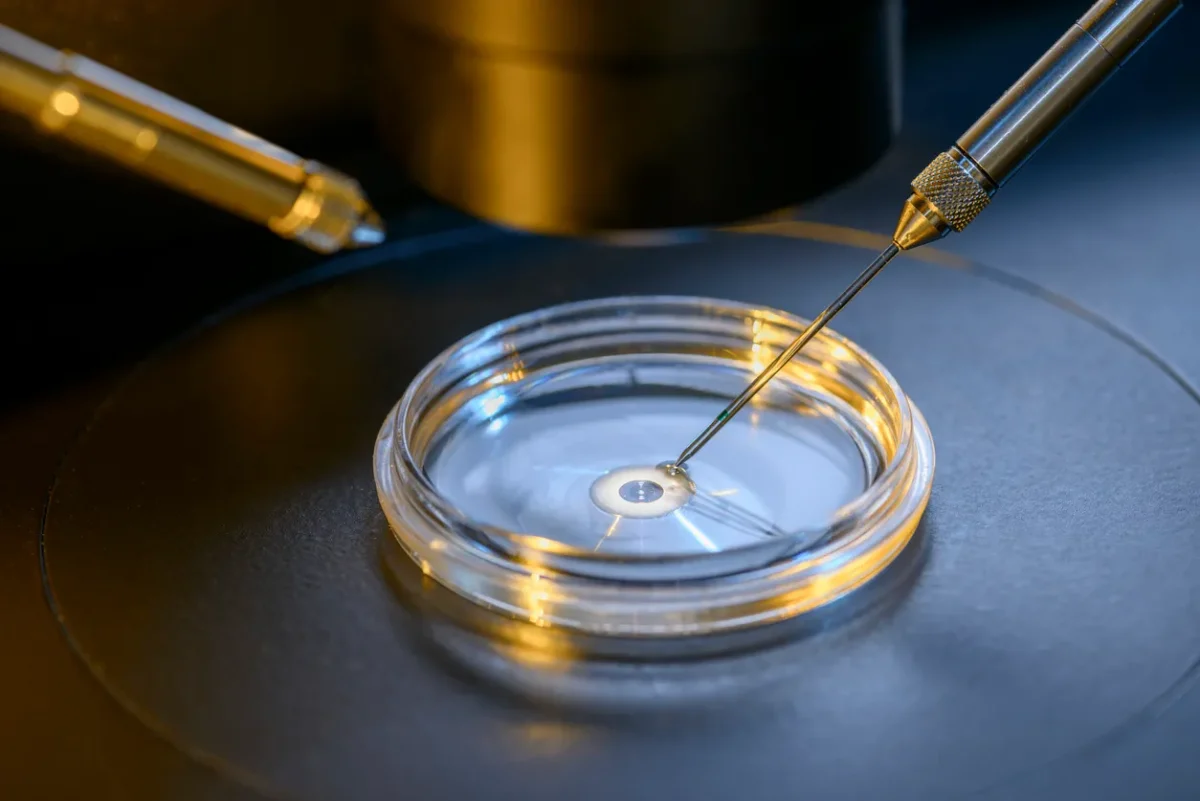
This process begins with eggs being retrieved from the ovaries and fertilized with sperm in a laboratory. After several days of careful monitoring, doctors select healthy embryos to transfer into the mother’s uterus. In some cases, families choose to freeze eggs, sperms, or embryos, giving them additional chances at pregnancy in the future. The embryo transfer is often described as the most hopeful moment of the process; which is when the embryo is transferred into the mother to grow and develop into a baby(ies).
For those of us born through IVF, it’s more than science. It’s the reason we exist.
[Kayla Novilla] My experience is similar, yet different, from most. After more than a year of trying, my parents turned to IVF and became pregnant on their second attempt. The embryo transferred into my mom eventually split, making me a twin. I was born two months early and faced serious health complications. I spent nearly five months moving though different Neonatal Intensive Care Units. After everything my parents went through, and everything I survived, my story became a reminder of how unpredictable and meaningful the IVF journey can be.
[Isaac Ramirez] I had a different experience than many others. My parents tried many times to do embryo transferers, but they always failed. They gave up and froze the left-over eggs. Five years had passed, and my parents tried again. They put my mom’s frozen eggs back in her and tried the natural way, testing fate and Gods will. Months later I was born making me my parents “miracle baby.”
Although IVF was once considered rare and experimental, it is now a well-established medical option. The American Society for Reproductive Medicine (ASRM) reports that advances in technology and care have made embryo transfer safer and more successful in recent years.
For families, however, the significance of IVF goes beyond science. Each successful transfer represents not just medical achievement but also the fulfillment of a lifelong dream.